· Carmina Shoemaker
The Wingtip: A Classic of Shoemaking
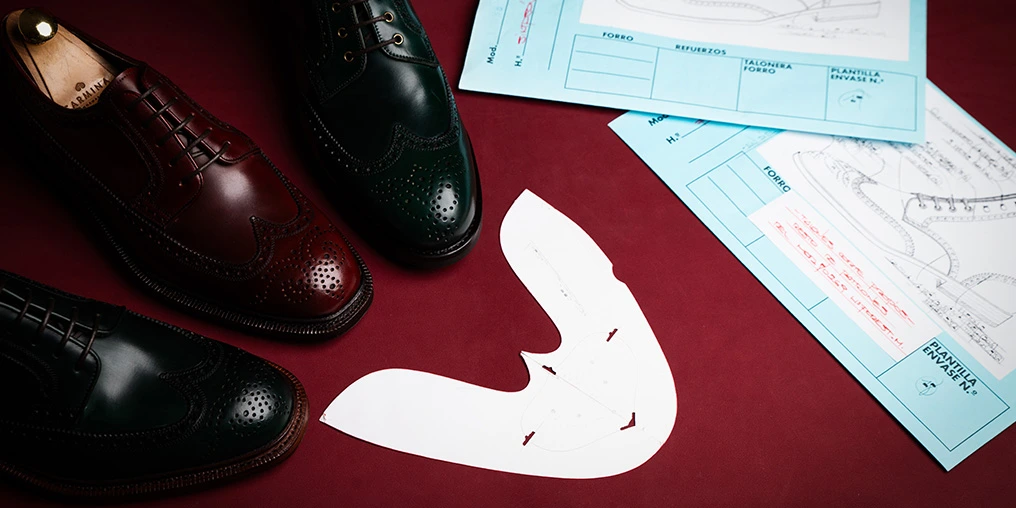
In classic shoemaking, pattern cutting does more than determine how a shoe is constructed. It also shapes its character. The way each section of the upper is drawn, proportioned, and joined plays a defining role in the final silhouette. The wingtip is one of the clearest examples: distinctive, balanced, and deeply rooted in the tradition of classic footwear.
At Carmina Shoemaker, the wingtip appears across a range of styles, from Oxfords and bluchers to boots, with each version adapted to the last, leather, and proportions of the model.
What is a wingtip?
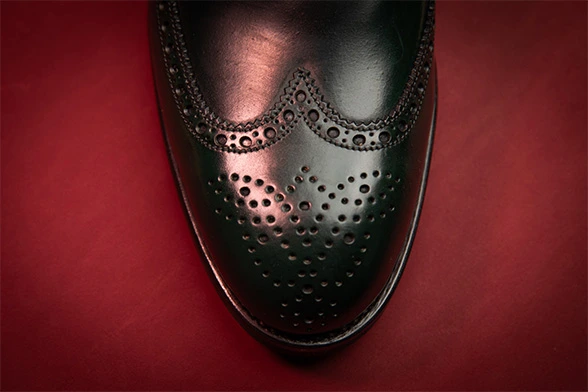
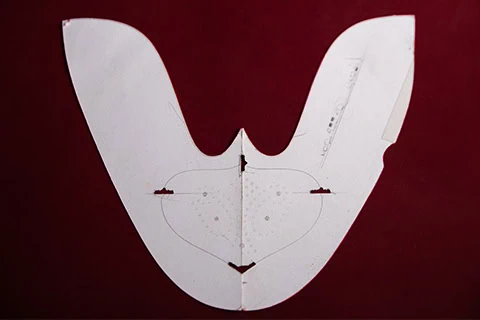
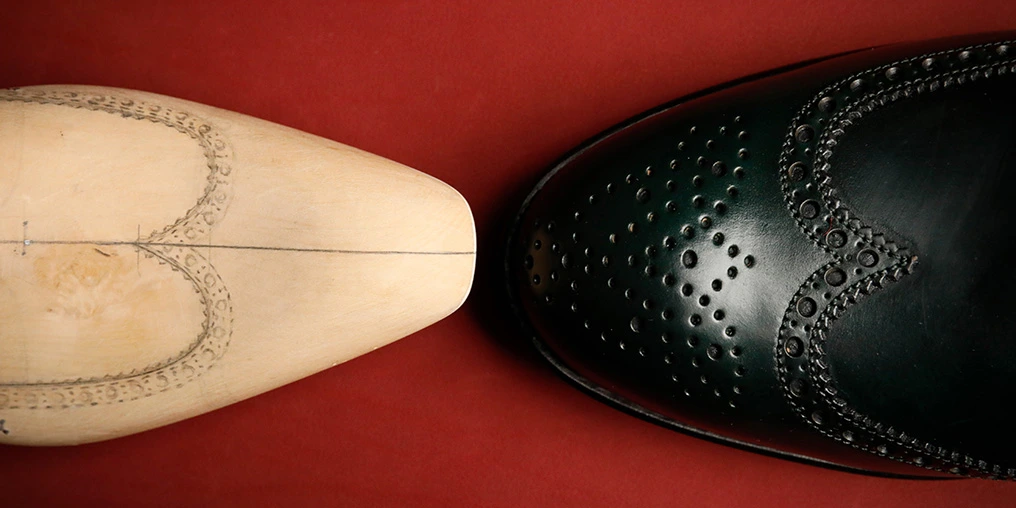
A wingtip, known in Spanish as a pala vega or puntera vega, is defined by the shape of its toe cap, which forms a distinctive “W” or “M” when viewed from above. Its ends extend toward the sides of the shoe, creating the characteristic wings that give the style its name.
It may appear in a clean, understated form or be combined with brogue detailing and decorative perforations. In either case, the shape of the toe remains the element that gives the style its unmistakable identity.
The pattern behind the wingtip
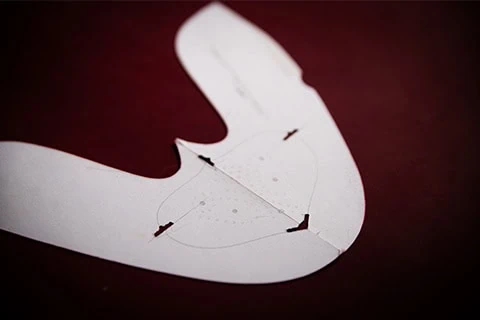
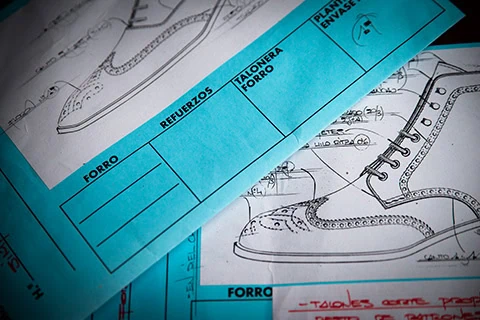
The shape of a wingtip begins with the pattern used to create the individual sections of the upper. These lines are developed in relation to the last on which the shoe will be made, taking the proportions of each model into account.
At Carmina Shoemaker, pattern development begins directly on the last. The lines drawn over its three-dimensional surface are then transferred to the individual pattern pieces used to cut the leather.
The length and sweep of the wings can vary from one model to another, changing the balance and overall look of the shoe while preserving the same underlying structure.
From Oxfords to bluchers and boots
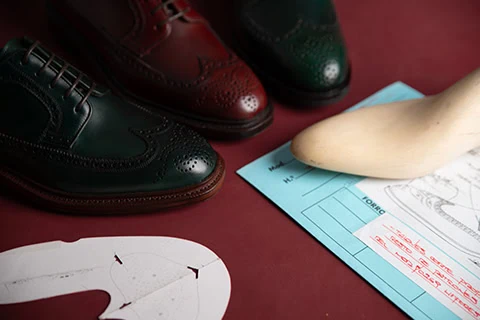
The wingtip is not limited to a single type of footwear. Within the Carmina Shoemaker collection, it can be found on Oxfords, bluchers, and boots.
Although all share the same characteristic toe shape, each takes on a different appearance depending on the last, leather, color, and finishing details selected for the model.
This versatility allows the wingtip to remain instantly recognizable while taking on very different expressions across classic footwear.
Leathers and details
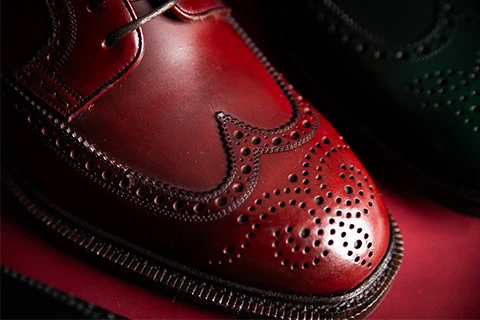
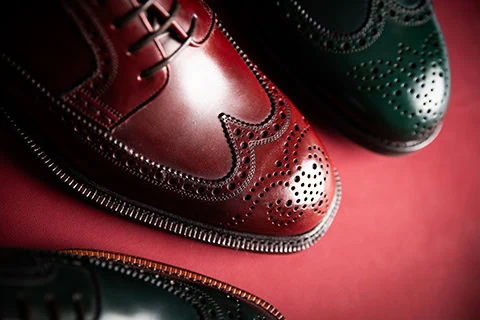
The choice of leather also plays an important role in the final look of the shoe. At Carmina, wingtip styles can be found in calfskin, suede, and Shell Cordovan, as well as in models that combine different leathers.
Brogue detailing, when present, follows the lines of the toe and emphasizes the shape of the wings, adding depth and definition without changing the essential structure of the style.
Leather, color, proportion, and finishing details all contribute to giving each version its own personality.
The wingtip at Carmina Shoemaker
At Carmina Shoemaker, the wingtip appears across different models in our collection and reflects the importance of pattern cutting in the creation of a shoe.
Oxfords, bluchers, and boots each offer a distinct interpretation of this recognizable silhouette through the last, leather, and finishing details, while preserving the shape that defines it.
The wingtip is ultimately a clear example of how pattern cutting can become part of a shoe’s identity. A classic design whose character is shaped by proportion, material, and close attention to detail.